The AI Employee Course, Part 2 of 10.
TL;DR: OpenClaw is an open-source engine for building and running AI agents. It gives an AI model a memory, a toolbox, and connectors to over 1,000 apps, so instead of just chatting, the agent can actually do work across your systems. It is the difference between a smart brain and a working employee, and because it is open, you are not locked into anyone's black box.
In Lesson 1 we said an AI agent is a model plus memory, tools, and a loop. This lesson is about the thing that assembles all of that for you. When an AI can book a meeting, chase an invoice, or reply on WhatsApp, something has to sit between the model and your apps, translating "book the meeting" into real API calls. That something, in a growing number of products, is OpenClaw.
What is OpenClaw, in plain English?
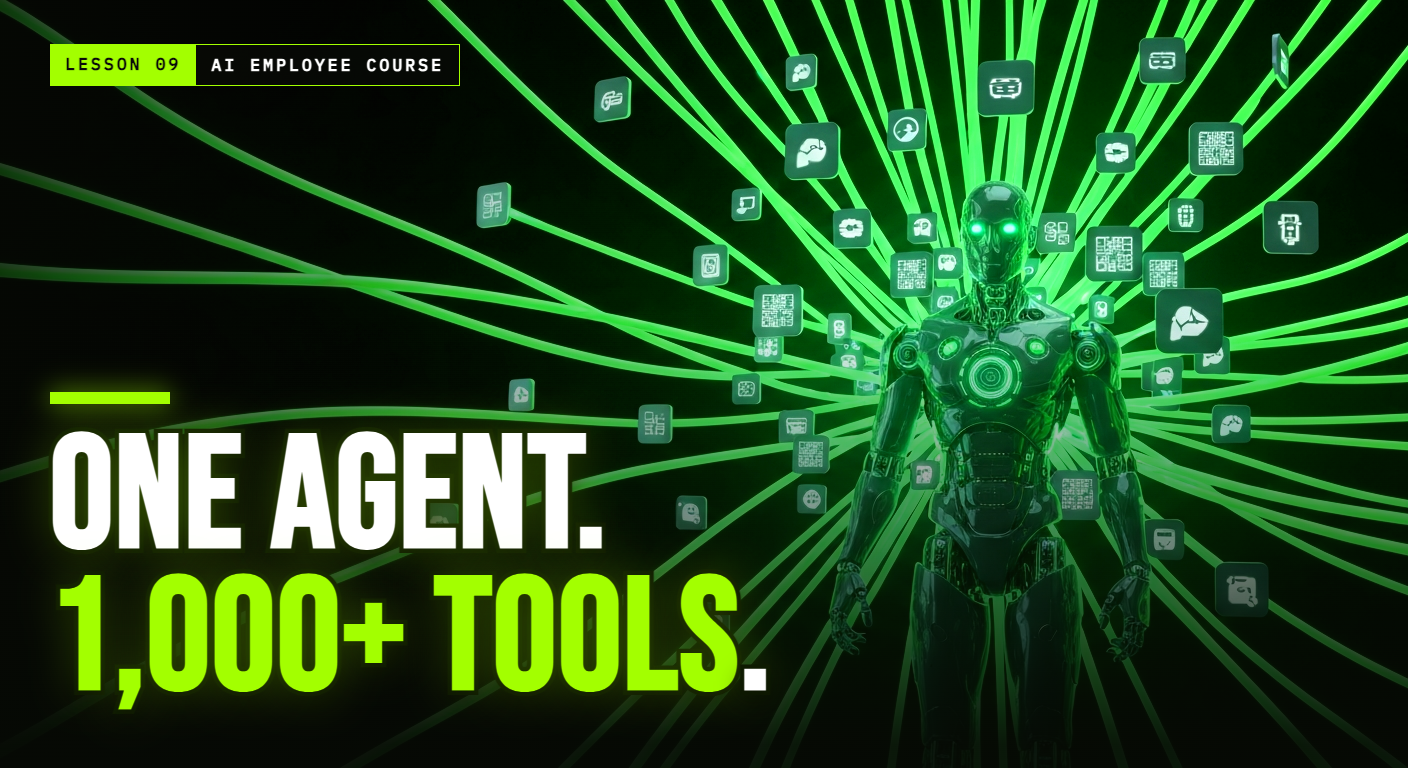
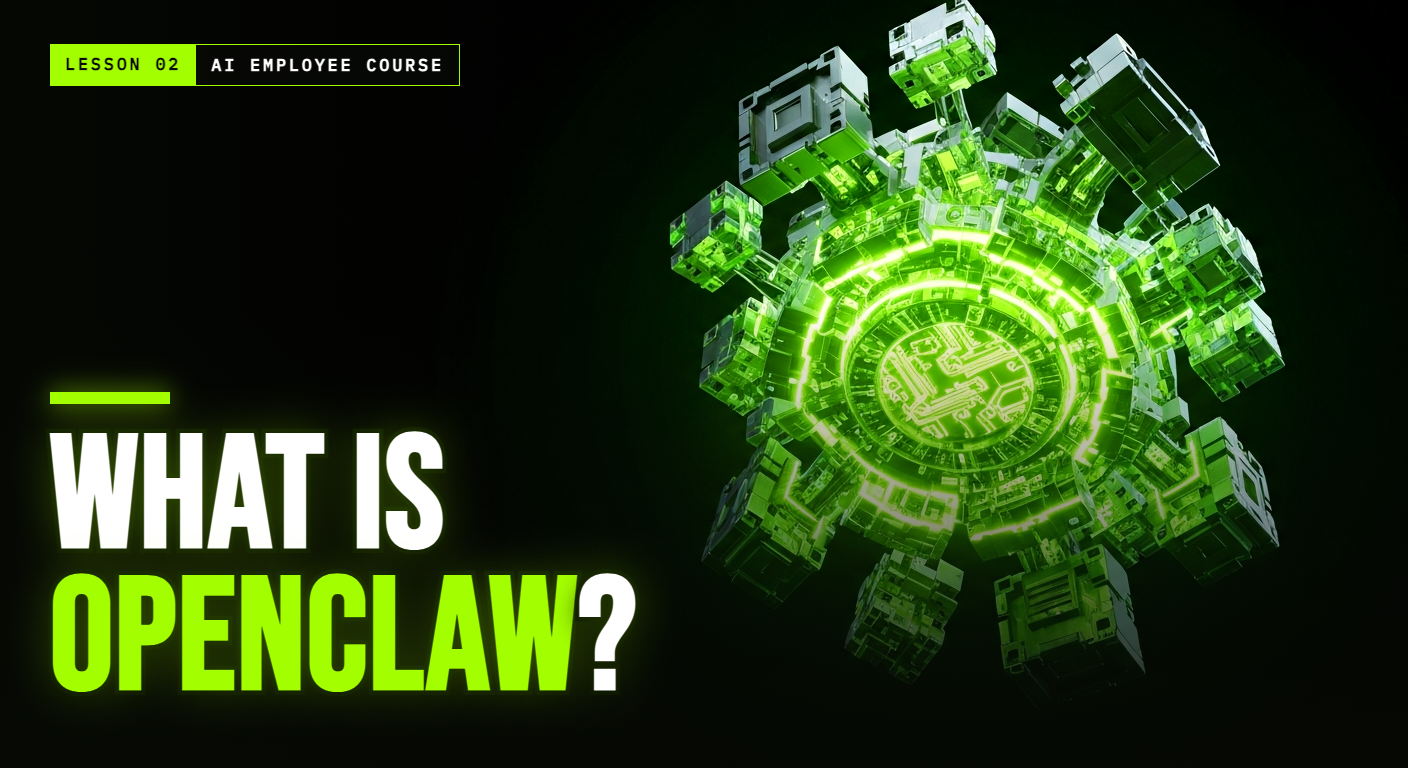
OpenClaw is an open-source framework that turns an AI model into an autonomous agent. On its own, a model like Claude or GPT is a brain in a jar: brilliant at language, but with no memory of you, no hands, and no way to act. OpenClaw gives it the rest of the body. It adds long-term memory, a library of tools, and connectors to more than 1,000 apps (WhatsApp, Gmail, Google Calendar, CRMs, Slack, Notion, and more).
Put simply: the model decides what to do, and OpenClaw is what lets it actually do it, safely and across all the software you already run.

Under the hood: how an engine like this actually connects to 1,000 apps
You do not need to be technical to use an agent, but knowing how the plumbing works makes it far less mysterious. Three pieces do the heavy lifting.
- A tool interface. Every action ("send email," "create event") is wrapped in a small, standard description the model can call. Modern engines increasingly use open standards (like the Model Context Protocol) so any tool can be plugged in the same way, which is how the integration list grows so fast.
- Secure connections (OAuth). The engine connects to your apps the same way any trusted service does: you grant permission once, and it holds a scoped key, not your password. You can revoke it any time.
- An orchestration loop. The engine runs the model, executes the tool it picked, feeds back the result, and repeats. This is the "perceive, decide, act" loop from Lesson 3, running on real infrastructure.
None of this is magic. It is careful engineering, and the fact that it is open source means that engineering can be inspected rather than taken on faith.
Why "open source" matters for a business owner
Open source means the code is public. Anyone can read it, run it, and build on it. For you, that translates into three concrete advantages.
- No black box. You are not handing your customer data and your inbox to a mystery service. How the agent works can be audited, by you or by anyone.
- No lock-in. Because the engine is open, you are not trapped in one vendor's walled garden. The agent can be hosted anywhere and moved, so your business is not hostage to one company's pricing or roadmap.
- It improves fast. Open frameworks attract a community. New integrations and capabilities arrive from many hands, not one company's release schedule.
The trade-off is real: running OpenClaw yourself means servers, security hardening, and connecting each app. That is a full technical project. It is why most people use a hosted product built on top of it rather than wiring it up alone. BOB, for example, is a hosted AI employee that runs on OpenClaw so you get the benefits without touching the plumbing.
What an agent built on OpenClaw actually does
Because it connects to over 1,000 systems, the capability list is long, but it clusters into a few jobs a business feels immediately:
- Answer and qualify messages across WhatsApp, email, and web chat.
- Book, confirm, and reschedule meetings on your calendar.
- Follow up on leads and unpaid invoices until they respond.
- Read a document or a call transcript and turn it into tasks.
- Keep your CRM updated without you touching it.
The point is not any single feature. It is that one agent, with one memory of your business, can do all of them, instead of ten disconnected apps that each do one and leave the wiring to you.
Frequently Asked Questions
Is OpenClaw the same as ChatGPT, Claude, or Gemini? No. Those are AI models, the brain. OpenClaw is the engine that gives a brain memory, tools, and the ability to act across your apps. You can even run OpenClaw with different models underneath it, and swap them as better ones arrive.
Do I need to install OpenClaw myself? You can, because it is open source, but most business owners don't. Setting it up means running servers and securely connecting each app. Hosted products built on OpenClaw handle all of that, so you just talk to your agent.
Is my data safe with an open-source engine? Open source is often safer for exactly this reason: the code is inspectable rather than a black box. What matters most is how a specific product hosts and secures it, so ask any provider where your data lives, who can see it, and whether connections use scoped, revocable access.
Part 2 of the AI Employee Course. Next, Lesson 3: how an AI agent actually works, the simple perceive-decide-act loop behind every agent.
P.S. BOB is a hosted AI employee built on OpenClaw, so you get the agent without the servers. Meet BOB.