The AI Employee Course, Part 7 of 10.
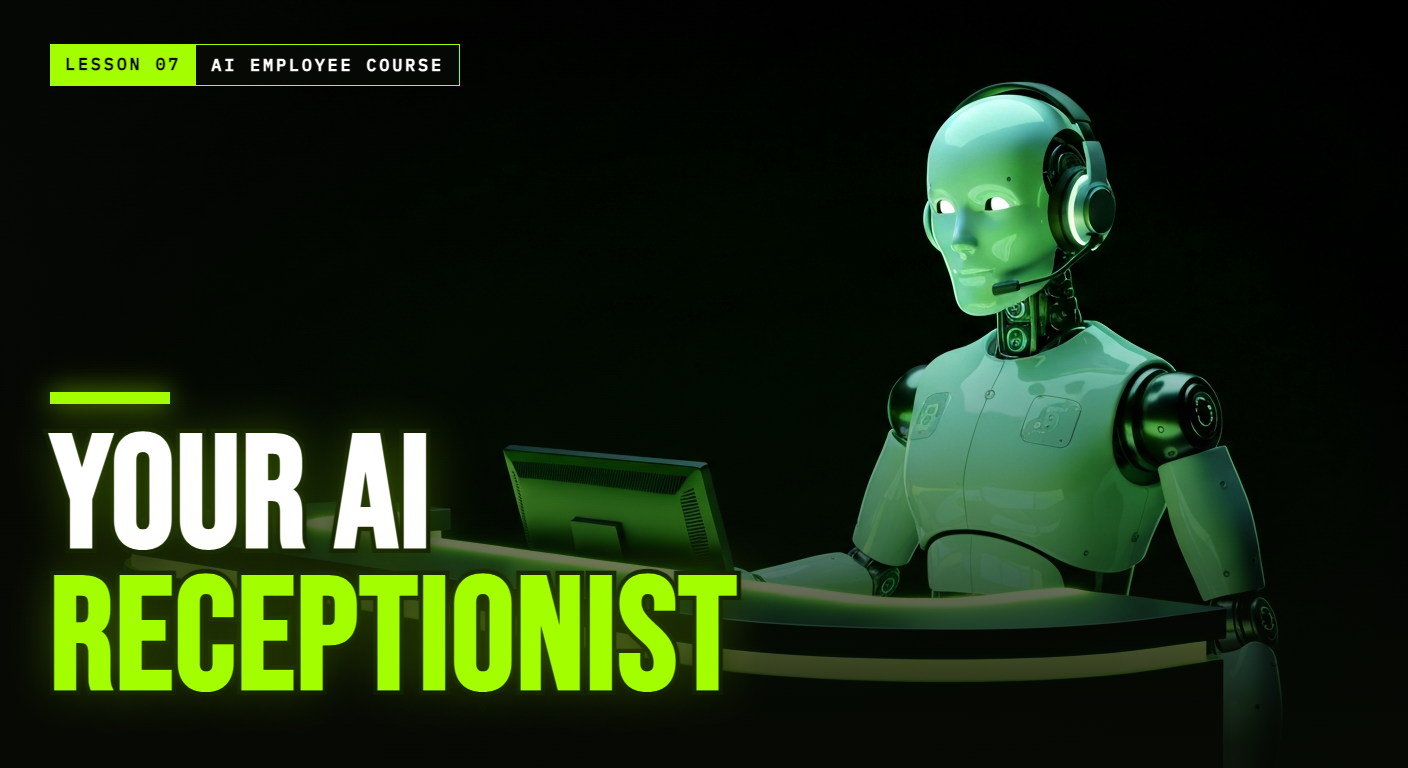
TL;DR: An AI receptionist answers your business messages and calls 24/7, across WhatsApp and phone, qualifies who is reaching out, books appointments, and hands the real emergencies to you. It gives a small business the front desk of a much larger one, without hiring for it, and it covers exactly the hours you lose customers.
The front desk is the most expensive gap in a small business, because every missed message is a missed customer, and you cannot be at the desk while you are doing the work. A chat AI cannot pick up the phone. An AI receptionist can, and that is the point of this lesson.
What an AI receptionist actually does
It is not a voicemail and it is not a rigid phone tree. It is an agent that handles the front-of-house conversation the way a good receptionist would.
- Answers instantly, on WhatsApp, web chat, and increasingly the phone, in your business's voice.
- Qualifies the request: new booking, existing customer, sales question, or something urgent.
- Books, confirms, and reschedules appointments straight into your calendar.
- Filters the noise so only what needs you reaches you.
- Covers after hours, weekends, and the moments you are with another customer.
The result is simple: nobody who contacts your business hits a wall, even when every human on your team is busy.

Why after-hours is the whole point
Most small businesses lose customers in the gaps: the 9pm inquiry, the Saturday message, the call that comes while you are mid-appointment. Those are exactly the moments a competitor with instant coverage wins the customer. A four-person clinic that gets thirty after-hours messages a week is not losing thirty conversations, it is losing the bookings, the revenue, and the reviews attached to them.
An AI receptionist works the gaps by default. It does not clock out. It turns "we were closed" into "already booked for Tuesday," which over a month is a real number of appointments you were quietly leaving on the table.
The voice frontier: what makes AI calls actually work
The newer capability is voice, and it is worth understanding what separates a good AI call from the frustrating phone robots of the past. Three things matter.
- Latency. A natural call needs the AI to respond in well under a second. Slow replies are what made old systems feel robotic. Modern voice agents are fast enough to feel like a real conversation.
- Barge-in. You can interrupt a good voice agent mid-sentence, the way you would a person, and it stops and listens. That one detail is most of what makes a call feel human.
- Language. It speaks your customer's language, so a local business sounds local.
Used well, an AI voice agent handles the calls that used to need a human at a desk: appointment reminders, confirmations, and simple questions. Complex or sensitive calls still route to you.
Escalation design: the part that builds trust
An AI receptionist should escalate, not overstep, and getting the escalation rules right is what makes it safe to put in front of customers. You decide, in plain language, what it handles end to end (routine bookings, FAQs, reminders) and what it routes to you immediately (an angry customer, a high-value opportunity, anything it is unsure about). Good setups also do a warm handoff: when it passes a conversation to you, it brings the full context, so the customer never has to repeat themselves. It is the front desk, not the final word, and it knows when to get you.
Frequently Asked Questions
Will customers know they are talking to an AI? Often not, if it is fast, relevant, and speaks naturally. The best setups are also honest when asked. What customers actually care about is getting a quick, correct answer, which an AI receptionist delivers better than a full voicemail box.
Can it really handle phone calls, not just chat? Yes. Modern AI agents can make and take voice calls for appointment reminders, confirmations, and simple questions, in your customer's language, and fast enough to feel like a real conversation. Complex or sensitive calls still route to a human.
What happens with an emergency or an upset customer? You set those as escalation triggers. The agent recognizes urgency or frustration and hands the conversation straight to you, with the context, instead of trying to resolve it alone.
Part 7 of the AI Employee Course. Next, Lesson 8: what makes an agent feel like a real employee, a name, an email, a phone, and memory.
P.S. BOB lives in WhatsApp and can call your customers to confirm appointments. Meet BOB.